


Pom Sheet
Polyoxymethylene (POM) sheets excel with high tensile strength, low friction, and chemical resistance, setting them apart from many polymers. Their dimensional stability and ease of machining distinguish POM, making it ideal for precise engineering, gears, and components where durability, low wear, and chemical resilience are paramount.
Benefits of Pom Sheet
High stiffness
POM sheet has a high modulus of elasticity (2.8-3.5 GPa), which means it can withstand high loads without deforming or breaking. It also has a high flexural modulus (2.6-3 GPa), which means it can resist bending or twisting forces.
Low friction
POM sheet has a low coefficient of friction (0.1-0.35), which means it can slide smoothly over other surfaces without sticking or squeaking. It also has a low static friction (0.05-0.2), which means it can start moving easily without much force.
Excellent dimensional stability
POM sheet has a low thermal expansion coefficient (80-110 x 10^-6/K), which means it does not change its shape or size much when exposed to heat or cold. It also has a low moisture absorption (0.2-0.8%), which means it does not swell or shrink when exposed to water or humidity.
Good wear resistance
POM sheet has a high abrasion resistance (200-600 mg/1000 cycles), which means it can withstand rubbing or scraping without losing its surface quality or performance. It also has a high fatigue resistance (>10^7 cycles), which means it can endure repeated stress or strain without cracking or breaking.
Good chemical resistance
POM sheet has a good resistance to most solvents, oils, fuels and acids. It does not corrode or degrade easily when exposed to these substances.
Industrial Big Data
POM sheet has a good resistance to temperatures up to 130 °C. It does not melt or burn easily when exposed to heat or fire.


Why Choose Us
Quality assurance
In terms of quality assurance, the company strictly follows the standards and norms of the industry quality system. Adopt industry-leading testing equipment to ensure product quality and good reputation.
Professional service
We can accept factory inspection and goods inspection at any time. Technical discussion, research and development of new products, and complete after-sales service.
Professional team
We have a team of skilled and experienced professionals who are well-versed in the latest technology and industry standards. Our team is dedicated to ensuring that our customers get the best service and support possible.
Competitive prices
We offer our products at competitive prices, making them affordable for our customers. We believe that high-quality products should not come at a premium, and we strive to make our products accessible to all.
Efficient and convenient
The company has established marketing networks around the world to provide high-quality services to customers in an efficient and convenient manner.
High quality products
We always put customer needs and expectations in the first place, refine on, continuous improvement, to seek every opportunity to do better, to provide customers with their expectations of quality products, to provide customers with the most satisfactory service at anytime.
Types of Pom Sheet
Polyamide 6 (white)
This material has the most superior comprehensive properties, including mechanical strength, stiffness, toughness, mechanical shock absorption and wear resistance. These characteristics, coupled with good electrical insulation and chemical resistance, make nylon 6 a "general-purpose" material for the manufacture of mechanical structural parts and maintainable parts.
Polyamide 66 (cream)
Compared with nylon 6, it has better mechanical strength, stiffness, heat resistance, wear resistance, and creep resistance, but its impact strength and mechanical shock absorption performance are reduced, which is very suitable for automatic lathe machining.
Polyamide 4.6 (reddish brown)
Compared with ordinary nylon, nylon 4.6 is characterized by strong rigidity retention, good creep resistance, and better heat aging resistance in a wider temperature range. Therefore, nylon 4.6 is used in the "higher temperature range" (80-150 °C) where nylon 6, nylon 66, POM and PET cannot meet the requirements in terms of stiffness, creep resistance, heat aging resistance, fatigue strength and wear resistance.
Polyamide 66+GF30 (black)
Compared with pure nylon 66, this nylon is reinforced with 30% glass fiber, and its heat resistance, strength, stiffness, creep resistance, dimensional stability, wear resistance and other properties are improved. Its maximum allowable use temperature is higher.
Polyamide 66+MOS2 (gray black)
This nylon is filled with molybdenum disulfide. Compared with nylon 66, its rigidity, hardness and dimensional stability are improved, but the impact strength is reduced. The grain forming effect of molybdenum disulfide improves the crystal structure, which improves the material's load-bearing and wear resistance.
This time our customers want us to process the POM sheet, the size of 800 * 900mm, an area of 0.72 square meters, the flatness requirement after processing is within 0.1mm. Due to the complexity of the texture, the amount of processing work is large, coupled with the possibility of bending and deformation of the POM plate during processing, a little inattention will not meet the flatness requirements.
At the beginning, we tried to process directly, but did not meet the flatness requirements; the second processing, we used vacuum suction cups to fix the plastic plate to prevent deformation during processing and damage to the workpiece, but still unsuccessful; the last attempt, we used heavy objects to flatten this plastic plate after processing, and finally met the flatness requirements.

How to Use Pom Sheet for Various Applications
Engineering and mechanical components
POM sheet can be used to make gears, bearings, bushings, couplings, cams, rollers, pulleys, sprockets, screws, nuts, bolts, washers, spacers, springs, clips, clamps, hinges, latches, handles, knobs, levers, valves, pumps, pistons, cylinders, seals, gaskets, etc. These components require high stiffness, low friction and good wear resistance.
Consumer products
POM sheet can be used to make eyeglasses frames, zippers, buttons, snaps, buckles, hooks, rings, chains, bracelets, necklaces, earrings, watches, pens, pencils, rulers, scissors, knives, forks, spoons, cups, plates, bowls, trays, containers, boxes, cases, etc. These products require high strength, hardness and durability.
Electrical and electronic devices
POM sheet can be used to make connectors, switches, sockets, plugs, terminals, contacts, relays, circuit breakers, fuses, resistors, capacitors, transistors, diodes, LEDs, sensors, actuators, motors, generators, transformers, coils, speakers, microphones, headphones, earphones, cameras, keyboards, mice, joysticks, game controllers, remotes, etc. These devices require good electrical and thermal properties and dimensional stability.
Food processing and packaging equipment
POM sheet can be used to make valves, pumps, conveyor belts, chains, rollers, guides, rails, screws, nuts, bolts, washers, spacers, clips, clamps, hinges, latches, handles, knobs, levers, nozzles, sprayers, injectors, fillers, sealers, cutters, slicers, grinders, mixers, blenders, juicers, etc. These equipment require good chemical resistance and food grade quality.
Medical devices and instruments
POM sheet can be used to make surgical tools, implants, catheters, tubes, syringes, needles, scalpels, forceps, scissors, clamps, staplers, sutures, stents, valves, pumps etc. These devices and instruments require high biocompatibility and sterilizability.
POM Sheets & Rods Technical Property Chart
|
Mechanical Properties |
Parameter |
Value |
|
Modulus of elasticity (tensile test) |
1mm/min |
2800 |
|
Tensile strength |
50mm/min |
67 |
|
Tensile strength at yield |
50mm/min |
67 |
|
Elongation at Yield |
50mm/min |
9 |
|
Elongation at break |
50mm/min |
32 |
|
Flexural strength |
2mm/min 10N |
91 |
|
Modulus of elasticity (flexural test) |
2mm/min 10N |
2600 |
|
Compression Strength |
1%/2% 5mm/min 10N |
20/35 |
|
Compression modulus |
5mm/min 10N |
2300 |
|
Impact strength (Charpy) |
Max. 7,5J |
150 |
|
Notched impact strength (Charpy) |
Max. 7,5J |
6 |
|
Ball indentation hardness |
- |
165 |
Nylon
Nylon is another type of engineering thermoplastic that is used for precision parts that require high strength and toughness. Nylon has a higher impact strength and elongation than POM sheet, which means it can absorb more energy and stretch more before breaking. However, nylon has a lower stiffness and dimensional stability than POM sheet, which means it can deform or warp more easily. Nylon also has a higher moisture absorption and thermal expansion than POM sheet, which means it can swell or shrink more when exposed to water or heat. Nylon also has a lower chemical resistance and thermal resistance than POM sheet, which means it can corrode or degrade more easily when exposed to harsh substances or temperatures.
Polypropylene
Polypropylene is a type of thermoplastic that is used for general-purpose applications that require low cost and light weight. Polypropylene has a lower density and a lower melting point than POM sheet, which means it is lighter and easier to process. However, polypropylene has a lower stiffness and strength than POM sheet, which means it can break or deform more easily. Polypropylene also has a lower dimensional stability and wear resistance than POM sheet, which means it can change its shape or size more easily and lose its surface quality or performance more quickly. Polypropylene also has a lower chemical resistance and thermal resistance than POM sheet, which means it can corrode or degrade more easily when exposed to harsh substances or temperatures.
Polycarbonate
Polycarbonate is a type of thermoplastic that is used for applications that require high transparency and impact resistance. Polycarbonate has a higher transparency and a higher impact strength than POM sheet, which means it can transmit light and withstand shocks better. However, polycarbonate has a lower stiffness and hardness than POM sheet, which means it can scratch or dent more easily. Polycarbonate also has a lower dimensional stability and wear resistance than POM sheet, which means it can change its shape or size more easily and lose its surface quality or performance more quickly. Polycarbonate also has a lower chemical resistance and thermal resistance than POM sheet, which means it can corrode or degrade more easily when exposed to harsh substances or temperatures.
How to Use Polyamide Thin-Layer Boards
Storage
Polyamide thin-layer boards should be stored in a clean, dry environment away from direct sunlight and chemical solvents, and should be protected from moisture, heat and contamination.
Processing
The processing methods of polyamide thin-layer boards include mechanical processing and chemical processing. Mechanical processing mainly uses machine tools for cutting, milling, punching and other operations; chemical processing mainly uses chemical cleaning agents and corrosive agents for etching and cleaning.
Installation
Polyamide thin-layer boards can be installed by screws, glue, welding and other methods. It should be noted that please read the instructions carefully before installation to understand the correct installation and maintenance methods.
Maintenance
The maintenance of polyamide thin-layer boards includes cleaning, coating, repainting, etc., which needs to be carried out regularly according to actual use. It should be noted that the cleaning materials should be warm water, special cleaning agents, etc., and scraping brushes and strong acids and alkalis should not be used; coating and repainting should use the same products as the raw materials and follow the instructions.
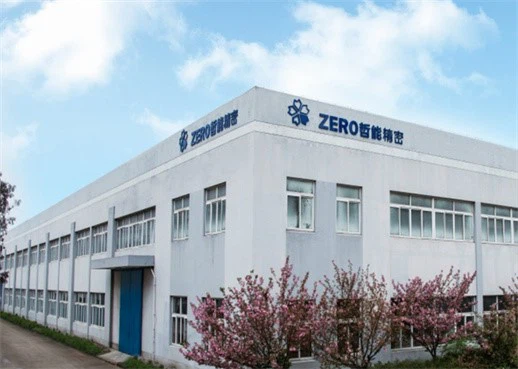
Our Factory
Zero Engineering, a former marketing sector of Zhe Long Plastic Co. (Registration No. 3302041001203) established in 2000, focuses on special plastic rods and sheets. Adhering to independent technology, Zero Engineering puts such high value on researching and developing that we make or design everything from the production line to tooling. We are also known as the inventor of “Pulse Extrusion” (Invention Patent No.201410330331.1), creating the top products of plastic such as PPS, PEEK, TPI, etc. Currently, we have 30 production lines of extrusion rods and sheets, displaying an immense abundant producing ability. There is a stable team of skilled workers, and most of them have been engaged in extrusion work for more than ten years with a deep understanding of extrusion. Zero Engineering, a domestic-leading firm of special plastic rods and sheets, has rich manufacturing experience.

Certifications

