


Pps Rod
PPS (polyphenylene sulfide) is a high-performance thermoplastic with an unusual set of properties. PPS offers exceptional strength, dimensional stability, chemical resistance, and electrical insulation at high operating temperatures.
Benefits of Pps Rod
High purity
Since pure PPS rods have high purity and do not add any fillers, they are very suitable for precision fastener processing;
High crystallinity
The high crystallinity of PPS determines that the mechanical strength and hardness of PPS are higher than those of general engineering plastics, which is very suitable for use in high-load environments;
Electrical insulation
Pure PPS profiles have high insulation performance and high dielectric constant, and the degree of insulation damage is very high, which is suitable for use in voltage-resistant environments;
Mechanical strength
Due to the molecular structure of PPS, PPS has inherent strength and rigidity, which is suitable for use in high-speed environments;
High temperature resistance
Pure PPS rods have high insulation performance and high dielectric constant, which is suitable for use in high-speed environments;
It can withstand temperatures up to 220 degrees in normal air for long-term use and is a very heat-resistant engineering plastic;
Chemical resistance
The physiological inertness of PPS makes it resistant to corrosion by a variety of chemical substances, including acids, alkalis, inorganic liquids, etc.;


Why Choose Us
Quality assurance
In terms of quality assurance, the company strictly follows the standards and norms of the industry quality system. Adopt industry-leading testing equipment to ensure product quality and good reputation.
Professional service
We can accept factory inspection and goods inspection at any time. Technical discussion, research and development of new products, and complete after-sales service.
Professional team
We have a team of skilled and experienced professionals who are well-versed in the latest technology and industry standards. Our team is dedicated to ensuring that our customers get the best service and support possible.
Competitive prices
We offer our products at competitive prices, making them affordable for our customers. We believe that high-quality products should not come at a premium, and we strive to make our products accessible to all.
Efficient and convenient
The company has established marketing networks around the world to provide high-quality services to customers in an efficient and convenient manner.
High quality products
We always put customer needs and expectations in the first place, refine on, continuous improvement, to seek every opportunity to do better, to provide customers with their expectations of quality products, to provide customers with the most satisfactory service at anytime.
The Commonality and Difference Between Pps Bar and Pom Bar
Commonality
Both profiles are polymer / high rigidity / high strength thermoplastic engineering plastics, both have high mechanical properties and dimensional stability, as well as good surface hardness, high wear / fatigue resistance, are more suitable for mechanical transmission parts.
Difference
Different working temperatures, PPS rods long-term temperature in the 180-220 degrees between long-term work, and POM rods working temperature is only 80-100 degrees; acid and alkali resistance is different, although POM can also be resistant to part of the acid and alkali and solution but with PPS compared to its acid and alkali / corrosion-resistant range is relatively narrow, in the known thermoplastic engineering plastics, PPS acid and alkali resistance has the most extensive and high stability; electrical properties are different, PPS has high mechanical properties and dimensional stability, as well as good surface hardness, high wear resistance / fatigue resistance, are more suitable for mechanical transmission parts. High stability; electrical properties are different, POM rod voltage resistance is only 15KV, dielectric constant is 3.8, PPS rod voltage resistance is 25KV, dielectric constant is 3.2; fatigue and self-lubricating strength is different, PPS rod has a high self-lubricating properties, especially without lubrication under the conditions of the coefficient of friction to maintain a lower and heat-resistant does not fall out of the skin, POM rods are prone to fatigue performance decline and prone to high temperature and high load conditions. POM rods are prone to fatigue performance decline and easy to peel.
What are the flame retardant properties of PPS rods
PPS (polyphenylene sulfide) is a high-performance engineering plastic with excellent flame retardant properties. As a common PSS product, PPS rods have the characteristics of self-extinguishing, low smoke and high temperature resistance, and can perform well in various harsh environments. Its superior flame retardant properties make it widely used in aerospace, electronic appliances, automotive industry and other fields.
PPS rods have self-extinguishing properties. Self-extinguishing refers to the ability of a material to stop burning by itself after the flame source is removed. When burned by flames, PPS rods will not continue to burn like ordinary plastics, but will stop burning by themselves after the flame source is removed, effectively reducing the spread of fire and improving safety.
PPS rods have low smoke. When a fire occurs, smoke will not only affect the escape of people, but also pollute the environment. PPS rods produce less smoke when burning, and the smoke does not contain toxic substances, reducing the harm of fire to the human body and the environment.
PPS rods are also resistant to high temperatures. The heat resistance temperature of PPS rods is usually between 200°C and 240°C, and they can work stably for a long time in a high temperature environment. In some high-temperature working environments, PPS rods can maintain stable performance and will not fail due to temperature rise, ensuring the normal operation of the equipment.
As an engineering plastic with excellent flame retardant properties, PPS rods are widely used in various fields. Its self-extinguishing, low smoke and high temperature resistance make it an ideal material for manufacturing high-temperature and corrosion-resistant parts and equipment. In the fields of aerospace, electronics and electrical appliances, and the automotive industry, PPS rods play an important role and provide guarantees for the safety and reliability of various industries. With the continuous advancement of science and technology and the continuous development of engineering plastics technology, it is believed that PPS rods will have broader application prospects in the future.
What Are the Uses of Pps Rods
As a high-performance thermoplastic, PPS rods have many impressive uses, and their unique physical and chemical properties enable them to show excellent performance in many fields.
FPPS rods are particularly widely used in the medical field. Because PPS has excellent heat resistance, chemical corrosion resistance and biocompatibility, it is often used to manufacture medical devices such as surgical instruments, catheters, stents, etc. These instruments need to withstand high temperature, high pressure and chemical disinfection during surgery. The excellent performance of PPS rods ensures the smooth progress of the operation and the safety of patients. In addition, PPS rods can also be used to make medical containers, such as test tubes, beakers, etc., for various chemical experiments in the laboratory. Its high transparency facilitates the observation of the experimental process.
PPSU rods are also widely used in the field of daily life. Baby bottles, tableware and other supplies made of PPS are deeply loved by consumers because of their safety, environmental protection and lightness. PPS materials are not only resistant to high temperatures, but also do not release toxic substances, ensuring the safety of baby products. In addition, PPS materials can also be used to make daily necessities such as water cups and thermos bottles to meet people's pursuit of high-quality life.

The first major difference between PEEK and PPS that limits their interchangeability is the maximum operating temperature: PEEK has a maximum continuous operating temperature of 480°F, while PPS has a maximum continuous operating temperature of 430°F. This means that PPS is limited to environments and applications where the operating temperature is less than 430°F. PPS has a lower PV limit than PEEK, which means that some bearing applications with high PV values may be limited to PEEK.
PEEK has a slightly higher tensile strength, while PPS has a higher compressive strength. PEEK also has a higher Izod notched impact strength, with PEEK ranging from 1.5 to 2.2 ft-lb/in (depending on the grade) and PPS ranging from 0.38 to 1.5 ft-lb/in. While PEEK and PPS have similar chemical resistance, PPS is the better choice of the two and has no known solvents below 400°F.
Key Attributes of Pps Rods
Exceptional Thermal Tolerance
PPS rods are engineered to withstand continuous exposure to temperatures as high as 230°C (446°F), ensuring reliability in applications where heat resistance is critical.
Unmatched Chemical Resistance
Their remarkable resistance to a broad spectrum of chemicals, including solvents, acids, and bases, allows PPS rods to maintain integrity in aggressive environments.
Dimensional Stability
The low coefficient of thermal expansion and high stiffness of PPS rods ensure that they maintain their precise dimensions, even under thermal stress or mechanical load.
Inherent Flame Retardancy
PPS rods are naturally flame-resistant, meeting stringent safety standards without the need for additional flame retardant additives.
Mechanical Strength and Durability
With their high strength, stiffness, and excellent creep resistance, PPS rods can withstand demanding applications, maintaining performance close to their melting point.
Pps Rod Production Process and Precautions
Barrel temperature
When the barrel temperature under the hopper is excessively reduced, the friction between the barrel and the screw will tend to increase.
If there is no problem with fluidity, a small temperature reduction will help reduce retention discoloration. In particular, it is best to set it to 300-320℃ when molding non-black molded products.
Mold temperature of PPS rods
The mold temperature has a great influence on the characteristics.
From the perspective of the appearance of the molded product, dimensional stability during high-temperature use, heat resistance, and creep resistance, the mold temperature is best higher than 130℃ and not lower than 120℃.
Injection pressure
It is usually best to use an injection pressure of 30 to 100MPa. In order to reduce flash, low-pressure molding is recommended.
Injection speed
In order to obtain a good appearance, high-speed injection should be performed. However, high-speed injection is prone to warping and burning of molded products, so as long as a good appearance can be achieved, there is no need to excessively use high-speed injection.
Back pressure
To keep the metering stable, it is recommended to set the back pressure to 2-5MPa. When the metering is unstable, the back pressure can be slightly increased to 8-10MPa.
Screw speed
Usually 40-100rpm is appropriate. The speed should not exceed 200rpm, otherwise it will cause the glass fiber to cut and the resin to heat up.
Our Factory
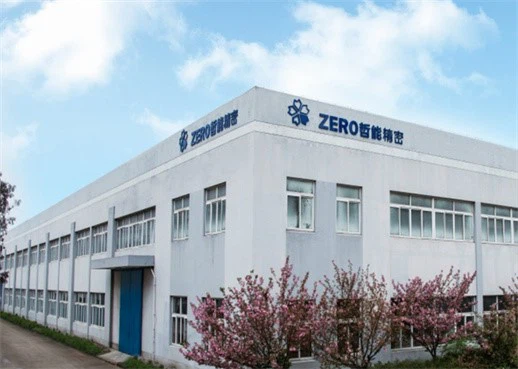
Zero Engineering, a former marketing sector of Zhe Long Plastic Co. (Registration No. 3302041001203) established in 2000, focuses on special plastic rods and sheets. Adhering to independent technology, Zero Engineering puts such high value on researching and developing that we make or design everything from the production line to tooling. We are also known as the inventor of “Pulse Extrusion” (Invention Patent No.201410330331.1), creating the top products of plastic such as PPS, PEEK, TPI, etc. Currently, we have 30 production lines of extrusion rods and sheets, displaying an immense abundant producing ability. There is a stable team of skilled workers, and most of them have been engaged in extrusion work for more than ten years with a deep understanding of extrusion. Zero Engineering, a domestic-leading firm of special plastic rods and sheets, has rich manufacturing experience.

Certifications

