


Pps Sheet
PPS material is a semi crystalline, thermoplastic high temperature polymer and chemically known as polyphenylene sulphide. Due to its structure, PPS plastic is chemical and corrosion resistant and has very good mechanical strength.
Why Choose Us
Quality assurance
In terms of quality assurance, the company strictly follows the standards and norms of the industry quality system. Adopt industry-leading testing equipment to ensure product quality and good reputation.
Professional service
We can accept factory inspection and goods inspection at any time. Technical discussion, research and development of new products, and complete after-sales service.
Professional team
We have a team of skilled and experienced professionals who are well-versed in the latest technology and industry standards. Our team is dedicated to ensuring that our customers get the best service and support possible.
Competitive prices
We offer our products at competitive prices, making them affordable for our customers. We believe that high-quality products should not come at a premium, and we strive to make our products accessible to all.
Efficient and convenient
The company has established marketing networks around the world to provide high-quality services to customers in an efficient and convenient manner.
High quality products
We always put customer needs and expectations in the first place, refine on, continuous improvement, to seek every opportunity to do better, to provide customers with their expectations of quality products, to provide customers with the most satisfactory service at anytime.


PPS (polyphenylene sulfide) is a high-performance thermoplastic with exceptional strength, dimensional stability, chemical resistance, and electrical insulation at high operating temperatures.

Electronics and electrical
Microelectronic component packaging, coil skeleton, motor housing, relay, fine-tuning capacitor and other parts. Precision instruments: computers, timers, copiers, temperature sensors and housings and parts of various measuring instruments.
Mechanical
Pump housing, pump wheel, valve, fan, flow meter parts, flange, universal head, etc. Automobile: igniter, clutch, transmission, gearbox, bearing bracket, exhaust system parts.
Household appliances
Protective coatings and parts of hot air dryers, curling irons, hair dryers, hair irons, rice cookers, etc.
Automobile industry
PPS is used in the automotive industry, accounting for about 45%, mainly for automotive functional parts; igniter, heater, carburetor, clutch, transmission, gearbox, bearing bracket, lampshade, bumper, fan, exhaust system and parts of reflectors and headlight holders. It can replace metal to make exhaust pipe circulation valves and water pump impellers, pneumatic signal regulators, etc.
How to Process Pps Fiberboard
Temperature control
PPS fiberboard has a high melting temperature, so it is necessary to pay attention to temperature control during processing. Too high a temperature may cause the material to burn or reduce the material properties, while too low a temperature may cause insufficient melting or reduced product quality.
Pressure control
Appropriate pressure can ensure that the material fully fills the mold or die head to avoid voids or loose areas. Too high a pressure may cause the mold to break or the product to deform, while too low a pressure may cause incomplete filling.
Mold design
The design of the mold is one of the key factors to ensure the quality of the final product. The mold should take into account the fluidity of the material, the cooling effect and the geometry of the product. Reasonable mold design can improve the surface quality, dimensional accuracy and mechanical properties of the product.
Subsequent processing
The processed PPS fiberboard may require subsequent processing, such as cutting, grinding, polishing, etc., to meet the requirements of the final product. These processing steps help improve the dimensional accuracy, surface quality and appearance of the product.
What is Pps Natural Sheet
Polyphenylene sulfide (PPS) - TECATRON - is a semi crystalline, high temperature thermoplastic. Due to its chemical structure, PPS is a very resistant polymer with high mechanical strength and stiffness, even at temperatures above 200 °C.
PPS sheet is a new type of high-performance thermoplastic resin with advantages such as high mechanical strength, high temperature resistance, chemical resistance, flame retardancy, good thermal stability, and excellent electrical performance. It is widely used in the fields of electronics, automobiles, machinery and chemical industry. PPS sheet has excellent high temperature resistance, corrosion resistance, radiation resistance, flame retardancy, balanced physical and mechanical properties, excellent dimensional stability and excellent electrical performance. It is widely used as a structural polymer material and is widely used as a special engineering plastic after filling and modification.
PPS sheet is a white, highly crystalline, hard and brittle polymer. The relative {HotTag} density of pure PPS is 1.3, but it will increase after modification. PPS has a very low water absorption rate, generally only about 0.03%. PPS has good flame retardancy, and its oxygen index is as high as 44% or more; compared with other plastics, it is a high flame retardant material in plastics.
PPS sheet has excellent thermal performance, its melting point exceeds 280℃, heat deformation temperature exceeds 260℃, it can withstand 260℃ for a short time, and can be used for a long time at 200℃. It degrades at 700℃ in air, and still maintains 40% of its weight at 1000℃ in inert gas. The heat deformation temperature of specially modified varieties can reach above 350℃.
PPS sheet has good radiation resistance, and its radiation resistance reaches Gy 1×10⁸. It is a new material that other engineering plastics cannot match. It is an excellent material in the fields of electronics, electrical, machinery, instruments, aviation, aerospace, military, etc.
PPS sheet has good processing performance: PPS resin has low melt viscosity, good fluidity, and is very easy to wet and contact with glass fiber, so the filling filler is simple. The glass fiber or inorganic filler prepared by it is used to reinforce the injection molding grade granules, which has extremely high anti-elasticity, impact resistance, anti-bending and ductility. It can be uniformly formed above its melting point.
How to Extrude Pps Board Plastic Rods and Sheets
Polyphenylene sulfide is a white powder with an average molecular weight of 0.4-0.5 million and a density of 1.3-1.8g/cm3. Polyphenylene sulfide has excellent thermal properties. After adding glass fiber, its thermal performance index is higher. Under the condition of 232°C5000h thermal aging, the mechanical properties of glass fiber, carbon fiber and filler are enhanced. Modified polyphenylene sulfide can maintain high mechanical properties and dimensional stability under long-term working load and heat load, and can be used in high temperature environment. The polyphenylene sulfide has the advantages of low dielectric constant, low dielectric loss, and insensitivity to frequency, temperature and humidity changes. It is an excellent electrical insulating material with long arc resistance time. The chemical stability of polyphenylene sulfide is very good. Except for strong oxidizing acid corrosion such as concentrated sulfuric acid, concentrated nitric acid, and aqua regia, most acid, alkali and salt corrosion is not large, which is close to the chemical stability of polytetrafluoroethylene. It is insoluble in any known organic solvent at 175°C, and plastic cracking will not occur when it comes into contact with poly (p-phenylene sulfide) and common organic solvents. Chemical corrosion resistance: No solvent has been found to dissolve polyphenylene sulfide below 200 degrees Celsius, and it has strong corrosion resistance to inorganic acids, alkalis and salts.
Resistant to chlorinated biphenyls and oxidizing acids, oxidants, aqua regia, hydrogen peroxide and sodium hypochlorite, etc. Pps has good radiation resistance, reaching Gy1×108. This is an unparalleled new type of engineering plastic. It is widely used in electronics, electricity, machinery, instruments, aviation, aerospace, military and other fields, especially in the fields of atomic bombs and neutron bombs, and is an ideal radiation protection material. Poly (p-phenylene sulfide) is chemically stable and contains flame retardant element sulfur, which makes it have excellent flame retardancy. Ignite the sample, adjust the flow of oxygen and nitrogen, and observe the combustion. The oxygen concentration that keeps the sample burning is the oxygen limit index. The higher the oxygen index, the better the flame retardancy. Pure polyphenylene sulfide has a limiting oxygen index of up to 44 and excellent fire resistance. Polyphenylene sulfide (p-phenylenesulfide) containing fillers or glass fibers has a high oxygen limit index and good flame retardancy. When the thickness of polyphenylene sulfide is 0.8mm, it can pass UL-94V0. Basically, except for a few grades, such as the toughness series, the UL94 flammability of all grades of PPS is V-0, which is already a good grade of UL94 flammability. Toughened series polyphenylene sulfide contains a variety of toughening agents, but sacrifices some fire resistance. Poly (p-phenylene sulfide) and poly (p-phenylene sulfide) without conductive additives provide excellent electrical insulation. Carbon fiber polyphenylene sulfide has a lower volume resistance coefficient. Physical properties 1. Excellent electrical insulation (especially high-frequency insulation), white hard and brittle, floor metal sound, light transmittance second only to plexiglass, resistant to sewage, and good chemical stability. Excellent flame retardant, non-flammable plastic.
Generally good strength and rigidity, but brittle and prone to stress brittle cracks; not resistant to organic solvents such as benzene and gasoline; long-term use temperature can reach 260 degrees, and remain stable in 400 degrees air or nitrogen. By adding glass fiber or other reinforcing materials, the mechanical properties of the material such as impact strength and heat resistance can be greatly improved, the density can be increased to 1.6-1.9, and the molding shrinkage can be reduced to 0.15-0.25%. It is suitable for manufacturing heat-resistant parts, insulation parts, chemical instruments, optical instruments and other parts. Formability 1. Amorphous materials have low hygroscopicity, but should be dried after forming. 2. The fluidity between ABS and PC is good, the solidification is fast, the shrinkage is easy to decompose, and high injection pressure and injection speed are selected. The mold temperature is 100-150 degrees. The taper of the main channel should be large and the flow channel should be short. Scope of application It can be used to make poly (p-phenylene sulfide) pipes, poly (p-phenylene sulfide) sheets and other materials, mainly used in construction and home furnishings.

Density board is also called fiberboard. Fiberboard uses wood fiber or other plant fiber materials as the main raw materials. It is crushed, soaked, ground into wood pulp, and then a certain amount of glue is added. It is made into a kind of man-made board through processes such as hot pressing, molding, and drying.According to the different volume densities of fiberboard, it can be divided into three types: high-density fiberboard, medium-density fiberboard, and low-density fiberboard; according to the surface, it can be divided into two types: one-sided smooth board and two-sided smooth board; according to the raw materials, it can be divided into wood fiberboard and non-wood fiberboard. High-density fiberboard has high strength, wear resistance, and is not easy to deform. It can be used for walls, door panels, floors, furniture, etc. Hardboard is divided into four grades: special grade, first grade, second grade, and third grade according to its physical and mechanical properties and appearance quality.Medium-density fiberboard can be divided into superior products, first-class products, and qualified products according to the technical indicators of the product.According to the adhesive used, it can be divided into urea-formaldehyde resin medium-density fiberboard, phenolic resin medium-density fiberboard, and isocyanate medium-density fiberboard.The structure of low-density fiberboard is loose, so its strength is low, but it has good sound absorption and thermal insulation properties. It is mainly used for suspended ceilings, etc. Hope you will adopt it.
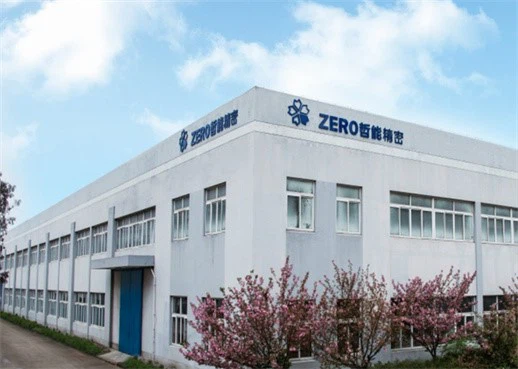
Our Factory
Zero Engineering, a former marketing sector of Zhe Long Plastic Co. (Registration No. 3302041001203) established in 2000, focuses on special plastic rods and sheets. Adhering to independent technology, Zero Engineering puts such high value on researching and developing that we make or design everything from the production line to tooling. We are also known as the inventor of “Pulse Extrusion” (Invention Patent No.201410330331.1), creating the top products of plastic such as PPS, PEEK, TPI, etc. Currently, we have 30 production lines of extrusion rods and sheets, displaying an immense abundant producing ability. There is a stable team of skilled workers, and most of them have been engaged in extrusion work for more than ten years with a deep understanding of extrusion. Zero Engineering, a domestic-leading firm of special plastic rods and sheets, has rich manufacturing experience.

Certifications

