


Overview of POM-C and POM-H
What is POM-H?
POM-H stands for polyoxymethylene homopolymer. When compared to the other variants of POM, the homopolymer has a higher melting point and is 10-15% stronger than the copolymer. However, both variants have same impact properties. POM-H is produced by anionic polymerization of formaldehyde, where the crystallization occurs well, resulting in high stiffness and strength. In general, POM-H has better physical and mechanical properties than POM-C. POM-H are best suited for applications where properties like good abrasion resistance and low coefficient of friction are needed.
What is POM-C?
POM-C stands for polyoxymethylene copolymer. This is produced by cationic polymerization of trioxane. During this process, a small amount of comonomers is added in order to increase the tightness, while lowering the crystallinity. The POM-C however, has low stiffness and strength than POM-H. But its processability is high when compared to POM-H. Because of this reason, POM-C has become the most widely used POM (75% of total POM sales). POM-C is well suited for applications where the property like low coefficient of friction is needed.
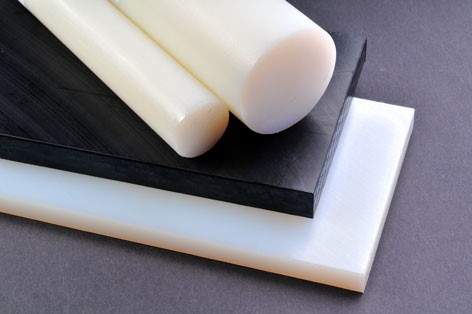
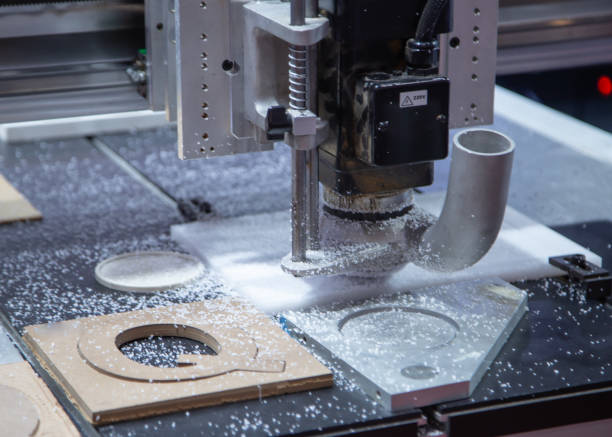
What is the difference between POM-H and POM-C?
Full Name
POM-H: Its full name is POM homopolymer.
POM-C: Its full name is POM copolymer.
Produced by
POM-C: It is produced by anionic polymerization of formaldehyde.
POM-H: It is produced by cationic polymerization of trioxane
Properties of POM-H and POM-C
Hardness and Stiffness
POM-H: POM-H is hard and stiff
POM-C: POM-C is not as hard and stiff as POM-H.
Processability
POM-H: Processability is low.
POM-C: Processability is high.
Melting Point
POM-H: Melting point is 172-184 °C.
POM-C: Melting point is 160-175 °C.
Processing temperature
POM-H: Processing temperature of POM-H is 194-244°C.
POM-C: Processing temperature of POM-C is 172-205°C.
Elastic modulus (MPa) (tensile with 0.2% water content)
POM-H: Elastic modulus is 4623.
POM-C: Elastic modulus is 3105.
Glass transition temperature (tg)
POM-H: Glass transition temperature is -85°C.
POM-C: Glass transition temperature is -60°C.
Tensile strength
POM-H: Tensile strength is 70 MPa.
POM-C: Tensile strength is 61 MPa.
Elongation
POM-H: Elongation is 25%.
POM-C: Elongation is 40-75%.
Prices varies
Only Dupont and Asahi Huacheng the two coporation have the technology and ability to produde POM-H, leads to the cost is much higher than POM-C.
How to choose the proper type for your exact requirments indeed?
General actual usage volume in industry:
POM-H: POM-H represents around 25% of total POM sales.
POM-C: POM-C represents around 75% of total POM sales.
Applications for choosing
Based on the properties of both materials, you should be able to guess when to choose either. Below are when to use both materials. in rapid prototyping.
· Heavy Loads
Both materials have high tensile strength and yield strength. However, Delrin is the better choice for making parts that apply constant heavy load over long periods due to its higher tensile and yield strength. Also, it would be best if you chose Delrin grade when working with parts exposed to repeated impact.
· Friction
Delrin has a lower coefficient of friction. Therefore, it is the better option when making parts that undergo back-and-forth or rotating sliding motion against another metal or plastic. When used, there is no need for lubrication.
· Dimensional Stability and Lightweight
When it comes to dimensional stability and lightweight, consider using acetal copolymers. They have a crystalline structure that reduces the dimensional stability, and the plastic material disrupts the organization of a large crystalline structure by not conforming to an organized slacking of the polymer.
· Chemical Resistance
This is a major distinction in the acetal vs Delrin comparison. Use acetal here as they are less susceptible to acidic or basic chemicals. The high resistance to chemicals will ensure that the part is not susceptible to industrial solvents, lubricants, agricultural.
· Temperature and Flammability
Avoid using both types of plastics in making parts that you will expose to long-term temperatures greater than 90°C. Also, avoid long-term immersion in hot water (>60°C). Besides, both materials are highly flammable and should not be used in applic
Overall, POM-H has better mechanical and physical properties than POM-C, being better suited for applications where you need solid abrasion resistance and a low friction coefficient. POM-C is not as strong or as stiff as Delrin, though POM-C is easier to process and works well in low friction applications.


