

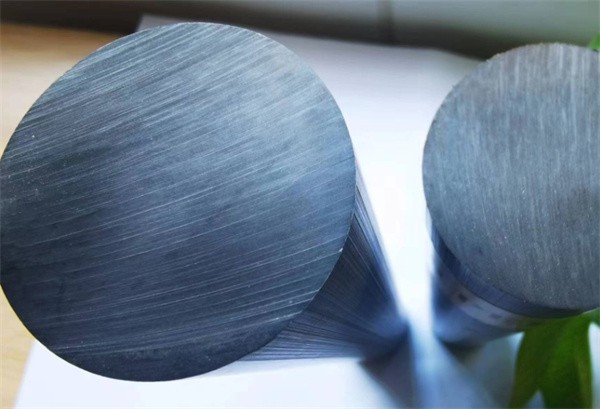
PEEK (polyetheretherketone) is a high-performance engineering thermoplastic known for its exceptional mechanical, thermal, and chemical properties. When reinforced with 30% carbon fiber (CF30), the resulting PEEK CF30 sheet offers enhanced stiffness, strength, and wear resistance, making it suitable for a wide range of demanding applications. As a supplier of PEEK CF30 sheets, I am often asked about the electrical properties of this material. In this blog post, I will explore the electrical characteristics of PEEK CF30 sheets and discuss their implications for various applications.
Electrical Conductivity
One of the most significant electrical properties of PEEK CF30 sheets is their electrical conductivity. Unlike pure PEEK, which is an excellent electrical insulator, the addition of carbon fibers imparts a certain degree of electrical conductivity to the material. Carbon fibers are highly conductive, and when dispersed throughout the PEEK matrix, they create a network of conductive pathways that allow electrons to flow.
The electrical conductivity of PEEK CF30 sheets can vary depending on several factors, including the orientation of the carbon fibers, the fiber volume fraction, and the processing conditions. Generally, PEEK CF30 sheets exhibit anisotropic conductivity, meaning that the conductivity is different in different directions. The conductivity is typically higher along the direction of the carbon fibers than perpendicular to them.
The electrical conductivity of PEEK CF30 sheets is relatively low compared to metals but significantly higher than that of pure PEEK. This makes PEEK CF30 sheets suitable for applications where some level of electrical conductivity is required, such as electrostatic dissipation (ESD) applications. In ESD applications, the material is used to prevent the buildup of static electricity, which can damage sensitive electronic components or cause explosions in flammable environments.
Dielectric Constant
The dielectric constant, also known as the relative permittivity, is a measure of a material's ability to store electrical energy in an electric field. It is an important property for applications involving capacitors, insulators, and electromagnetic shielding. The dielectric constant of PEEK CF30 sheets is influenced by the presence of carbon fibers, which can increase the polarizability of the material.
The dielectric constant of PEEK CF30 sheets is typically higher than that of pure PEEK due to the contribution of the carbon fibers. However, the exact value of the dielectric constant can vary depending on the frequency of the applied electric field, the temperature, and the moisture content of the material. At low frequencies, the dielectric constant of PEEK CF30 sheets is relatively stable, but it may increase slightly with increasing frequency.
The dielectric constant of PEEK CF30 sheets is also affected by the orientation of the carbon fibers. Similar to the electrical conductivity, the dielectric constant is typically higher along the direction of the carbon fibers than perpendicular to them. This anisotropy in the dielectric constant can be exploited in applications where directional control of the electrical properties is required.
Dielectric Strength
The dielectric strength is a measure of a material's ability to withstand an electric field without breaking down. It is an important property for applications where the material is used as an insulator or in high-voltage environments. The dielectric strength of PEEK CF30 sheets is influenced by several factors, including the quality of the material, the thickness of the sheet, and the presence of any defects or impurities.
The dielectric strength of PEEK CF30 sheets is generally lower than that of pure PEEK due to the presence of carbon fibers, which can act as conducting paths and reduce the breakdown voltage. However, the exact value of the dielectric strength can vary depending on the processing conditions and the orientation of the carbon fibers. In general, PEEK CF30 sheets with a higher fiber volume fraction and a more uniform fiber distribution tend to have a lower dielectric strength.
Despite the lower dielectric strength compared to pure PEEK, PEEK CF30 sheets still offer good electrical insulation properties and can be used in a variety of applications where moderate electrical insulation is required. However, for applications where high dielectric strength is critical, such as high-voltage insulation, pure PEEK or other high-performance insulating materials may be more suitable.
Applications of PEEK CF30 Sheets Based on Electrical Properties
The unique electrical properties of PEEK CF30 sheets make them suitable for a wide range of applications in various industries. Some of the common applications of PEEK CF30 sheets based on their electrical properties include:
Electrostatic Dissipation (ESD) Applications
As mentioned earlier, the electrical conductivity of PEEK CF30 sheets makes them suitable for ESD applications. In these applications, PEEK CF30 sheets are used to prevent the buildup of static electricity on the surface of equipment or components. This is particularly important in industries such as electronics, semiconductor manufacturing, and aerospace, where static electricity can cause damage to sensitive electronic devices or pose a safety hazard.
PEEK CF30 sheets can be used in the fabrication of ESD workstations, trays, and containers, as well as in the production of ESD flooring and mats. The controlled electrical conductivity of PEEK CF30 sheets allows for the safe dissipation of static charges, protecting the sensitive equipment and ensuring a safe working environment.
Electromagnetic Shielding Applications
The electrical conductivity of PEEK CF30 sheets also makes them suitable for electromagnetic shielding applications. In these applications, PEEK CF30 sheets are used to block or reduce the transmission of electromagnetic waves, protecting sensitive electronic components from electromagnetic interference (EMI). This is particularly important in industries such as telecommunications, automotive, and aerospace, where EMI can cause malfunctions or performance degradation of electronic systems.
PEEK CF30 sheets can be used in the fabrication of electromagnetic shielding enclosures, gaskets, and shields, as well as in the production of EMI filters and connectors. The high electrical conductivity of PEEK CF30 sheets allows for the effective absorption and reflection of electromagnetic waves, providing reliable electromagnetic shielding performance.
Electrical Insulation Applications
Although the dielectric strength of PEEK CF30 sheets is lower than that of pure PEEK, they still offer good electrical insulation properties and can be used in a variety of applications where moderate electrical insulation is required. PEEK CF30 sheets can be used in the fabrication of electrical insulators, bushings, and connectors, as well as in the production of printed circuit boards (PCBs) and other electronic components.
The high mechanical strength and chemical resistance of PEEK CF30 sheets make them suitable for use in harsh environments where traditional insulating materials may not be able to withstand the conditions. Additionally, the anisotropic electrical properties of PEEK CF30 sheets can be exploited in applications where directional control of the electrical insulation is required.
Conclusion
In conclusion, PEEK CF30 sheets offer unique electrical properties that make them suitable for a wide range of applications in various industries. The addition of carbon fibers imparts a certain degree of electrical conductivity to the material, making it suitable for ESD and electromagnetic shielding applications. The dielectric constant and dielectric strength of PEEK CF30 sheets are also influenced by the presence of carbon fibers, and these properties can be tailored to meet the specific requirements of different applications.
As a supplier of High-performance PEEK Sheet Natural Color, Peek Cf30 Sheet, and Natural PEEK Sheet With High Performance, we are committed to providing our customers with high-quality materials that meet their specific needs. If you are interested in learning more about the electrical properties of PEEK CF30 sheets or would like to discuss your specific application requirements, please do not hesitate to contact us. We look forward to the opportunity to work with you and help you find the best solution for your project.

References
- "Polyetheretherketone (PEEK): A Review of Its Synthesis, Properties, and Applications" by John M. Warrington and Robert J. Young
- "Carbon Fiber Reinforced Polymers: A Review of Their Properties and Applications" by John A. Cornie and David W. Richerson
- "Electrical Properties of Polymer Composites" by L. A. Utracki and R. A. Weiss


